By Sithuthukile Madonsela
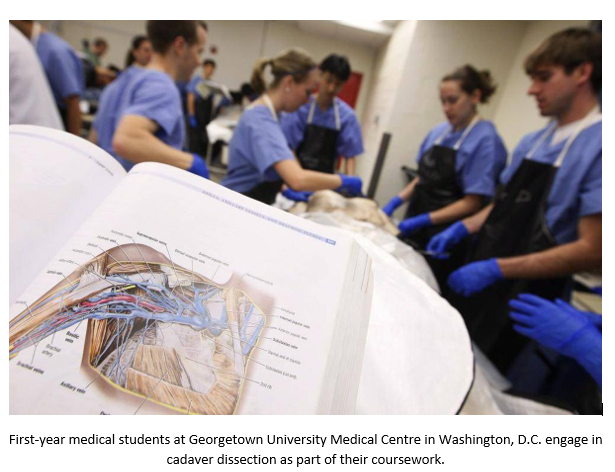
When one thinks of the functions of the various chemicals that comprise embalming fluids, preservation is often the first one that comes to mind. What most people don’t know is that most of these chemicals, for example Formaldehyde, behave as both a fixative and a disinfectant.
The problem – why was this study conducted?
Whilst one of the main reasons for embalming human remains is to prevent the onset of putrefaction – i.e., the action of micro-organisms on the tissues of the body – an inadequate amount of data is available in the literature on the comparative antimicrobial properties of embalming fluids.
The question that the researchers set to answer
Researchers belonging to the Department of Anatomy and Neuroscience at the University of Cork College set out to quantify the number of bacteria present in different regions of human cadavers embalmed using either Thiel, formalin, Genelyn, or Imperial College London soft-preservation (ICL-SP) embalming techniques.
How did the researchers go about answering their research question?
Eight cadavers were embalmed using Thiel, formalin, Genelyn, and ICL-SP, with 2 cadavers per technique. The formalin, Genelyn, and ICL-SP solutions were introduced into the body through the femoral artery, as per regular embalming procedures.
The results
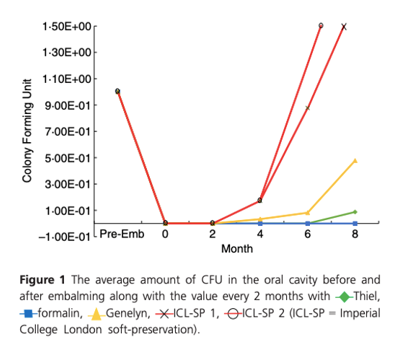
Before embalming, micro-organisms were detected in various parts of the body in varying quantities, with the highest being in the oral cavity and rectal region. Formalin and Genelyn embalming solutions showed the greatest disinfecting abilities, with no microbial colonies being detected in the cadavers embalmed with either solution. The number of colonies in Thiel-embalmed cadavers decreased dramatically, they did; however, remain relatively the same in ICL-SP-embalmed cadavers.
Food for thought – the discussion
Despite the absence of micro-organisms on several regions of the body in Thiel-embalmed cadavers, a high number of colonies was detected in the rectal region. Researchers attributed this finding to the ability of Thiel embalming solutions to not harden tissues as opposed to Formaldehyde-based solutions. According to researchers, the fixing ability of Formaldehyde leads to the constriction of the anal sphincter, a process that does not occur in Thiel-embalmed cadavers. This prevents the discharge of faecal material from the rectum, resulting in a decreased number of micro-organisms.
There was a noticeable difference in the number of colony forming units (CFU) between the cadavers embalmed using their ICL-SP technique (ICL-SP 1 and ICL-SP 2), with ICL-SP 2 decomposing faster than ICL-SP 1. Researchers attributed this difference to either 1) the large burden of disease experienced by ICL-SP 2 due to metastatic cancer before death (which could have accelerated the decomposition process), or 2) the chemicals within the ICL-SP solution not having perfused into the tissue of ICL-SP 2 to prevent its decay.
Take-home message
The fundamental point emphasised in this article was that antimicrobial properties are an important factor when considering an embalming solution, not only to prevent the transmission of infectious diseases but to also slow the process of tissue decay after death. With this being said, further research needs to be conducted in which the disinfecting abilities of different embalming solutions are studied whilst factors such as the medical background and cause of death of each body donor are considered.
References
- Balta, J. Y., Cryan, J. F., & O’Mahony, S. M. (2019). The antimicrobial capacity of embalming solutions: a comparative study. Journal of applied microbiology, 126(3), 764–770. Available from: https://doi.org/10.1111/jam.14191.
- Grant, K. (2014). Dissection debate: Why are medical schools cutting back on cadavers? Available from: https://www.theglobeandmail.com/life/health-and-fitness/health/dissection-debate-why-are-medical-schools-cutting-back-on-cadavers/article18296300/.

 Health Science Reviews
Leave a comment