By Bontle Kgothule
It begins quietly – a scrape, a fever, a routine infection. But in today’s world, what once healed with a standard antibiotic can spiral into a life-threatening illness. Antimicrobial resistance (AMR) is no longer a looming threat. It’s here, reshaping modern medicine and overwhelming health systems globally. In South Africa, like many parts of the world, drug-resistant bacteria are pushing vulnerable communities into dangerous territory, where effective treatment is often out of reach.
But what if the solution was hiding in plain sight?
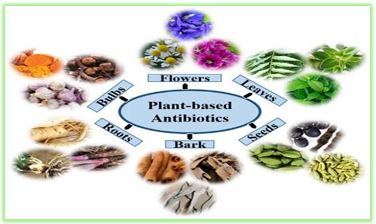
Figure 1: Nature’s Arsenal – Hidden in Leaves, Roots, Bark, and Beyond – draws from different phytochemicals found
in each part, offering natural antimicrobial defences against infection (developed by Basavegowda & Baek (2022))
In a 2025 systematic review, researchers examined the efficacy of natural products in combating the world’s most deadly pathogens. Mining through 4371 published studies, they carefully selected 290 clinical trials that targeted 12 families of bacteria ranked by the World Health Organization as top resistance threats, including Staphylococcus aureus, Escherichia coli, Pseudomonas aeruginosa, and Klebsiella pneumoniae. These pathogens, responsible for hospital-acquired infections, skin conditions, and even foodborne illnesses, are evolving rapidly. Yet, across Africa, South Asia, and South America, scientists have turned to medicinal plants, which have been long used in traditional healing, to find new answers. The review revealed powerful antimicrobial effects in flavonoids, phenols, alkaloids, terpenoids, and tannins. Many plant extracts showed astonishingly low Minimum Inhibitory Concentrations (MICs), sometimes as low as 0.2 µg/mL, signaling potent bacterial suppression.
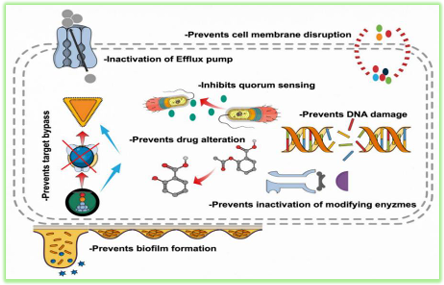
Figure 2: Plant-derived compounds employ multi-targeted tactics, from disrupting biofilms, dismantling bacterial
membranes, and silencing resistance enzymes to combat antimicrobial threats. Adapted from (Alsheikh et al., 2020)
What’s more, these compounds didn’t just stand alone. They worked synergistically with existing antibiotics, reducing drug resistance and enhancing therapeutic outcomes. Among extraction methods, ethanol and methanol proved popular, with green solvents like ethanol offering a sustainable route forward.
My takeaway: This isn’t just a catalogue of plant chemicals. It’s a call to action. In regions rich with biodiversity and battling AMR firsthand, investing in local medicinal knowledge could unlock affordable, accessible treatment alternatives. With Africa contributing key research, we have both the urgency and the innovation to lead global
efforts toward nature-powered healthcare.
Reference:
Alsheikh, H. M. Al, Sultan, I., Kumar, V., Rather, I. A., Al‐sheikh, H., Jan, A. T., & Haq, Q. M. R. (2020). Plant‐based phytochemicals as possible alternative to antibiotics in combating bacterial drug resistance. In Antibiotics (Vol. 9, Issue 8, pp. 1–23). MDPI AG. https://doi.org/10.3390/antibiotics9080480
Basavegowda, N., & Baek, K. H. (2022). Combination Strategies of Different Antimicrobials: An Efficient and Alternative Tool for Pathogen Inactivation. In Biomedicines (Vol. 10, Issue 9). MDPI. https://doi.org/10.3390/biomedicines10092219
SeyedAlinaghi, S., Mehraeen, E., Mirzapour, P., Yarmohammadi, S., Dehghani, S., Zare, S., Gholami, S., Attarian, N., Abiri, A., Farahani Rad, F., Tabari, A., Afroughi, F., Gholipour, A., Roozbahani, M. M., & Jahanfar, S. (2025). A systematic review on natural products with antimicrobial potential against WHO’s priority pathogens. European Journal of Medical Research, 30(1), 525. https://doi.org/10.1186/s40001-025-02717-x

 Health Science Reviews
Leave a comment