By Frances Schnell
Cervical cancer remains a major global health concern, especially in regions with limited access to HPV vaccination and routine screening. It’s the fourth most common cancer in women worldwide and is responsible for more than 300,000 deaths each year. While we know that persistent infection with high-risk human papillomavirus (HPV) is the leading cause, HPV infection alone doesn’t fully determine who develops cancer. In fact, the vast majority of HPV infections are cleared by the immune system and never progress. So what tips the balance?
Researchers have increasingly begun to explore the role of other biological factors that might influence disease progression, including immune function, inflammation, genetic susceptibility, and nutrient status. One nutrient of growing interest is vitamin D, particularly in its active form: 1,25-dihydroxyvitamin D₃ which is also known as calcitriol. Aside from keeping bones healthy, vitamin D seems to have a few unexpected roles, including how our cells grow and behave. A 2014 study by Wang et al., published in Oncology Reports, explored whether vitamin D could slow cervical cancer cell growth by targeting a cancer-promoting gene called HCCR-1.
HCCR-1 (Human Cervical Cancer Oncogene 1) is overexpressed in several tumour types and is known to suppress p53, a key tumour suppressor that regulates cell cycle arrest and apoptosis. To investigate vitamin D’s effect, researchers treated HeLa cells, a commonly used cervical cancer cell line, with increasing concentrations of 1,25(OH)₂D₃ over 24–72 hours. They measured how the cells grew and how much HCCR-1 was expressed, using MTT assays for proliferation, and RT-PCR and Western blotting for gene and protein expression.
The results were striking. Cell proliferation decreased in a dose- and time-dependent manner, with increasing calcitriol resulting in stronger inhibition shown in Figure 1. HCCR-1 expression also dropped sharply at both the mRNA and protein levels. Interestingly, when the researchers overexpressed HCCR-1 using a vector, it blocked the calcitriol induced inhibition and cell proliferation increased. This points to HCCR-1 as a major player in how vitamin D slows down cancer cell growth.
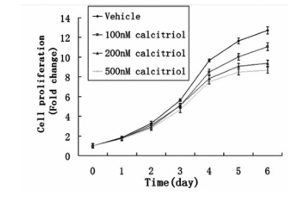
Figure 1: The effect of increasing activated vitamin D doses on cell proliferation. Adapted from Wang
et al., 2014
This was a well-designed in vitro study, and although the results are promising, there are clear limitations. It was done in a single cervical cancer cell line, and there’s no patient or animal data to confirm how this may play out in real life. Still, the research does point to an interesting molecular pathway worth exploring further. It also adds to the case that vitamin D could have a role alongside existing treatments, especially in the earlier stages of cervical disease like CIN (cervical intraepithelial neoplasia), where prevention and intervention overlap. Keeping vitamin D levels in a healthy range might do more than just support your immune system, it could also affect the way certain genes behave in cancer. While we’re not at the point where vitamin D is a treatment on its own, research like this adds to the idea that something as simple and affordable as vitamin D could play an important role in preventing or slowing disease.
Source:
Wang, G., Lei, L., Zhao, X., Zhang, J., Zhou, M., & Nan, K. (2014). Calcitriol Inhibits Cervical
Cancer Cell Prolifera on Through Downregula on of HCCR1 Expression. Oncology
research, 22(5-6), 301–309. h ps://doi.org/10.3727/096504015X14424348425991

 Health Science Reviews
Leave a comment