By Jidah Petersen
Drugs (whether it’s over the counter or not) are of everyday recreational use, whether it’s used to cure a chronic disease, or for temporary enjoyment. But what do we really know about these medications and drugs and the long-term effects it has on our bones? This same question led a group of researchers to seek out the full effects of certain medications and recreational drugs on the skeleton through a forensic anthropologist’s view.
But what is a forensic anthropologist? They are scientists who apply their knowledge of skeletal biology and bioarcheology to investigate mutilated or skeletal remains (i.e., samples with little to no soft tissue) to help the forensic pathologist determine the postmortem interval or draw up a demographic profile (identifying the age, sex, and stature of the individual).
So, how did they do this? To find out the answers, they conducted a comprehensive literature review, sourcing information from medical, clinical, pharmacological, and forensic anthropological literature across several databases, including PubMed, Scopus, and Science Direct. Their process was structured in two steps: firstly, investigating the general relationship between drugs and bone health, and then secondly, researching specific drugs that were identified as having bone involvement. Utilizing this information, they outlined the reported effects the drugs had on bones, including the effect it has on forensic anthropological parameters such as age-at-death and sex estimation.
The results they collected demonstrated that commonly used drugs (including whether it’s for recreational or medicinal purposes) that come with long-term usage or high doses risk numerous bone alterations, with the most common summarized below:
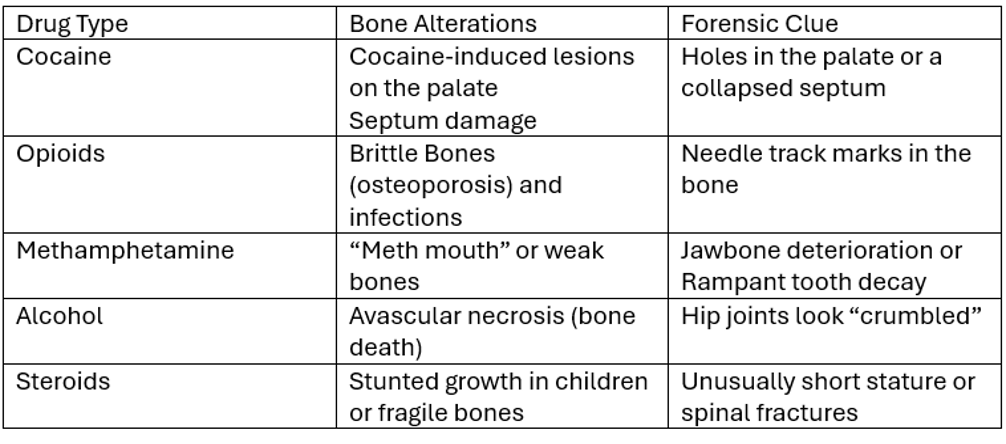
Table 1. Data demonstrating drugs and their corresponding effects on bone health.
This paper addresses the crucial yet under-investigated area in forensic anthropology, looking at how different drugs affect the bones long-term, even after death. These drugs are used worldwide, whether for recreational or medicinal purposes. Understanding the skeletal effects is significant for forensic anthropologists as it could be increasingly vital for identifying skeletal remains. Additionally, this information should be further used to raise awareness amongst teenagers and young adults, who could look after their health and prevent or lessen the detrimental effects of these drugs on their health.
References:
Márquez-Grant, N., Baldini, E., Jeynes, V., Biehler-Gomez, L., Aoukhiyad, L., Passalacqua, N. V., Giordano, G., Di Candia, D., & Cattaneo, C. (2022). How Do Drugs Affect the Skeleton? Implications for Forensic Anthropology. Biology. 11(4):524.

 Health Science Reviews
Leave a comment