By Emma van der Velden
For many, pregnancy is a time of anticipation and joy but for some pregnant mothers in South Africa
there may be an unknown risk that could detrimentally affect their own health as well as their baby’s.
Group B Streptococcus (GBS) is a bacterium that lives quietly in the gut and reproductive tract of many
healthy adults. It’s usually harmless but it can also lead to severe invasive disease. For newborns, GBS
can be deadly. It’s a leading cause of sepsis, pneumonia, and meningitis in the first week of life.
Unfortunately, most babies are infected by their mothers during birth.
In a study led by researchers at Dr. George Mukhari Hospital in Pretoria, scientists wanted to find out
what risk factors are associated with maternal GBS colonisation in South Africa. South Africa, like
many low-resource countries, doesn’t have a national screening or prevention policy for GBS, despite
its severe consequences. Therefore, understanding – and hopefully reducing – the risk factors associated
with maternal GBS colonisation could greatly reduce neonatal infections.
The dedicated team followed 340 pregnant women from 16 weeks gestation through delivery and
beyond. Swabs from both the mothers were tested for GBS, and mothers and babies were monitored for
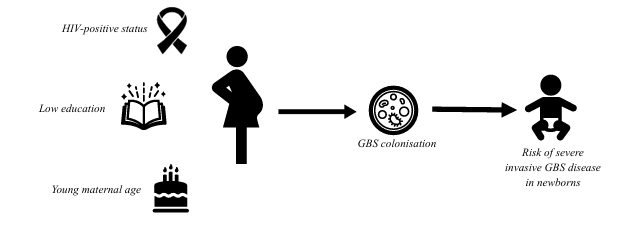
complications. The results were sobering. Almost half the mothers (48.2%) were colonized with GBS
which is one of the highest rates recorded globally. Colonization was significantly linked to HIV
positive status, low education levels, and a young maternal age. Although most babies were healthy,
24% of those tested were GBS-positive, and one developed early neonatal sepsis.
This study doesn’t just reveal a problem; it also offers a call to action. These risk factors are relevant to
a large portion of South Africa’s mothers and therefore cannot be ignored. Simple, low-cost
interventions like screening in late pregnancy and administering antibiotics during labour could save
lives. In places where healthcare resources are already stretched thin, recognizing GBS as a priority
could make all the difference for mothers, their babies, and for both their futures.
Reference
Matsiane Lekala, L. 2015. Risk Factors Associated with Group B Streptococcus Colonization and Their
Effect on Pregnancy Outcome. Journal of Gynecology and Obstetrics. 3(6):121. DOI:
10.11648/j.jgo.20150306.14.

 Health Science Reviews
Leave a comment