By Kian Visser
THE PROBLEM
In the world of forensic investigations, bones can be like pages of a book, offering clues to untangle the events leading up to a person’s death. In cases involving blunt force trauma, such as car accidents, understanding how bones break can provide important insights into the direction and severity of an impact. This could help law enforcement determine whether something was done intentionally or by accident. However, accurately interpreting this “bone language” has proven challenging, especially when it comes to a specific type of fracture known as the butterfly fracture.
So, what exactly are researchers trying to figure out? Historically, butterfly fractures, first observed in long bones, like the femur (the largest bone in your leg) were thought to form in a very predictable way. This theory suggests that the bone breaks into a Y-shape, leaving a triangular fragment behind. Scientists believed that this fragment always pointed in a specific direction, revealing where the impact occurred. But things may not really be this simple.
METHOD
A group of forensic scientists set out to reexamine this assumption. Using sheep bones as a stand-in for human femurs (due to their structural similarities), they conducted experiments to simulate blunt force impacts. By dropping weights onto sheep bones, the researchers studied the resulting fractures, focusing on whether the traditional method of determining impact direction was reliable.
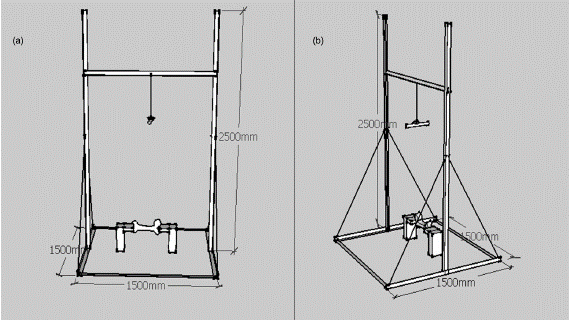 Figure 1: Drop test apparatus used to fracture bones (Emrith, Mole & Heyns, 2022)
FINDINGS
Butterfly fractures aren’t always accurate for impact direction inference. The fractures formed in 73% of the 60 cases but not always in the way expected. The study revealed that relying solely on the traditional method could lead to errors in interpretation. More surprisingly, the research showed that examining the surface of the bone, what they call “fractography”, provided a more accurate way to determine the impact direction. Fractography involves looking at specific characteristics on the bone’s fracture surface, such as smooth areas or ridges, which indicate the type of force applied (compression or tension). Compression forces are associated with more rough and jagged surfaces, while tension forces are seen as smoother surfaces.
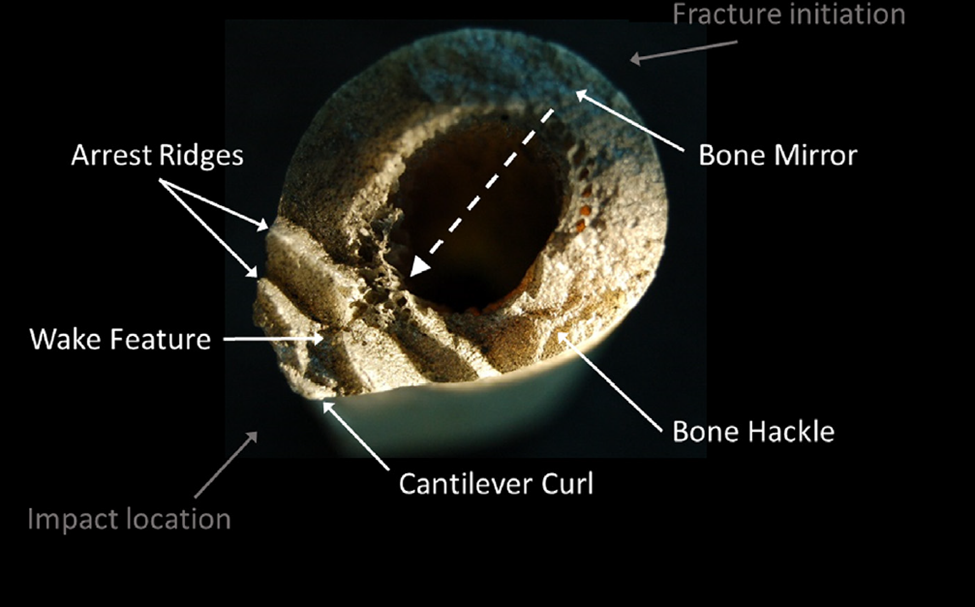 Figure 2: Fractographic characteristics used to infer impact direction (Christensen & Hatch, 2019)
TAKEAWAYS
While bones tell stories, we need the right tools to read them. This study not only challenges older methods of forensic analysis but also highlights the potential of more advanced techniques, like fractography, to improve the accuracy of forensic analyses, thereby aiding law enforcement services. Understanding how bones break could be the key to unlocking the unknowns behind traumatic deaths.
References
Emrith, T.S., Mole, C.G. & Heyns, M. 2022. Interpreting impact direction: applying fractography to the analysis of butterfly fractures produced by blunt force trauma. Australian journal of forensic sciences. 54(1):26-41.
Christensen, A. & Hatch, G. Forensic fractography of bone using computed tomography (CT) scans. J Forensic Radiol Imaging. 2019; 18: 37–9.

 Health Science Reviews
Leave a comment