By Tanith Fester
High density lipoprotein particles (or HDL for short) have long been regarded as a hero in the body as its main function is to take cholesterol (HDL-c) away from the cells of the body to the liver. This allows for cholesterol to be degraded, which is good because excess cholesterol, if not removed, can build up in arteries and contribute to the formation of an atherosclerotic plaque which obstructs blood flow. Thus, cholesterol transported by HDL is dubbed “good cholesterol”. On the other hand, the low density lipoprotein (LDL) is infamous for its role in transporting cholesterol (LDL-c) to other cells in the body- bad, bad, bad!
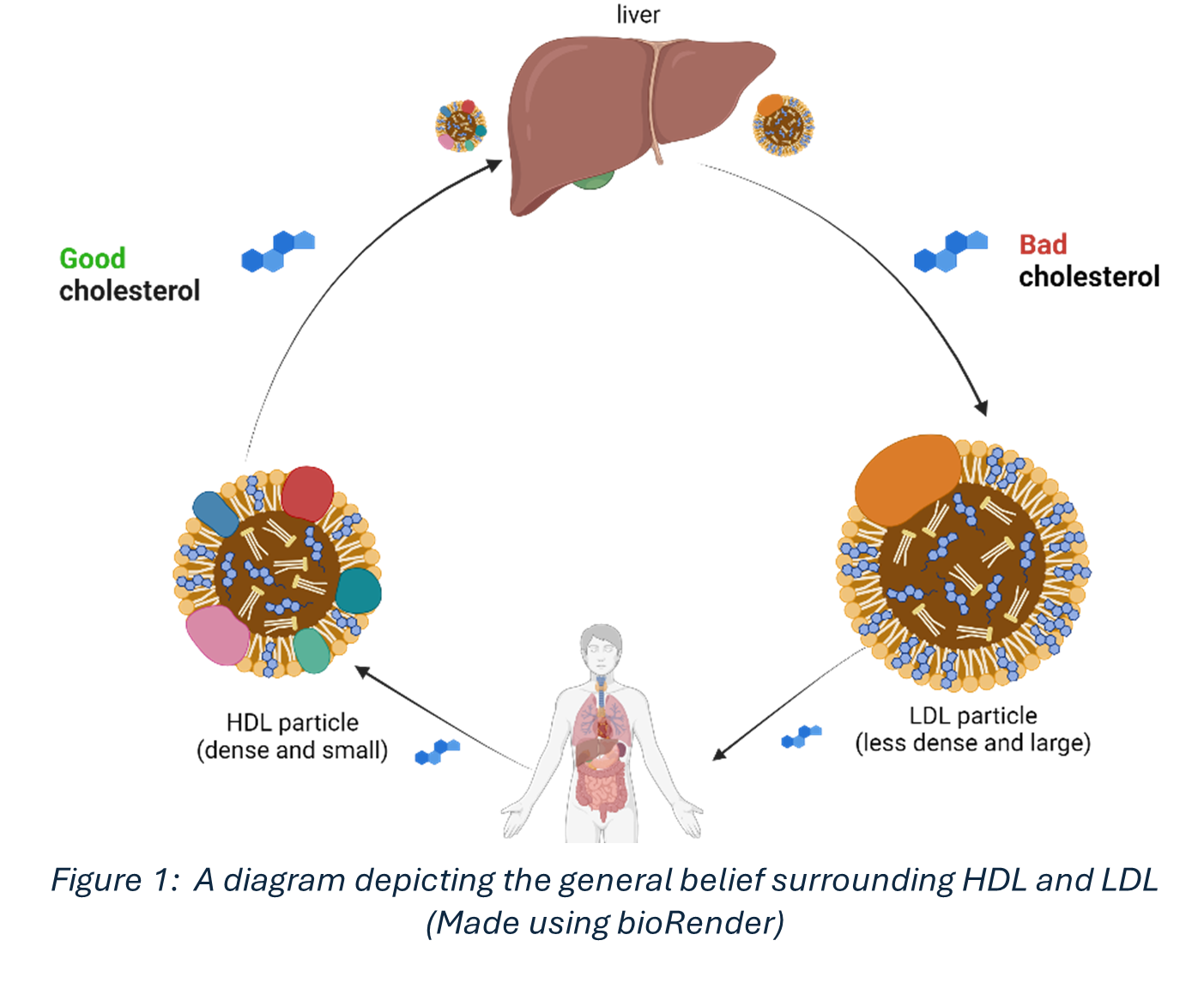
But how did HDL-c become so popular among scientists and physicians alike?
The first time HDL-c really gained its popularity in protection from cardiovascular disease was in the Framingham Heart Study1. This study, published in 1977, followed-up 2, 815 individuals who did not initially have heart disease. They observed that higher HDL-c levels were associated with lower risk of developing heart disease. In contrast, high LDL-c levels were associated with a higher risk of cardiovascular disease. Many epidemiological studies have since then supported this inverse association between HDL-c (good cholesterol) and heart disease. This is the reason why physicians assess your total cholesterol to HDLc ratio so that they can appreciate how much of the good cholesterol forms part of your total level of cholesterol.
But does this mean that high HDL-c levels are always protective? Or could HDL particles be a hero… and a villain like its bigger, badder counterpart?
Recently, Madsen and collagues2 looked at the association of very high levels of HDL-c with death caused by any disease (i.e. all-cause mortality) in two large groups from Denmark (100 000 individuals). To their surprise, the association was a U-shaped curve. Both extremely high HDL-c concentrations (>97 mg/dL for men, >116 mg/dL for women) and lower concentrations (<39 mg/dL) were associated with higher risk!
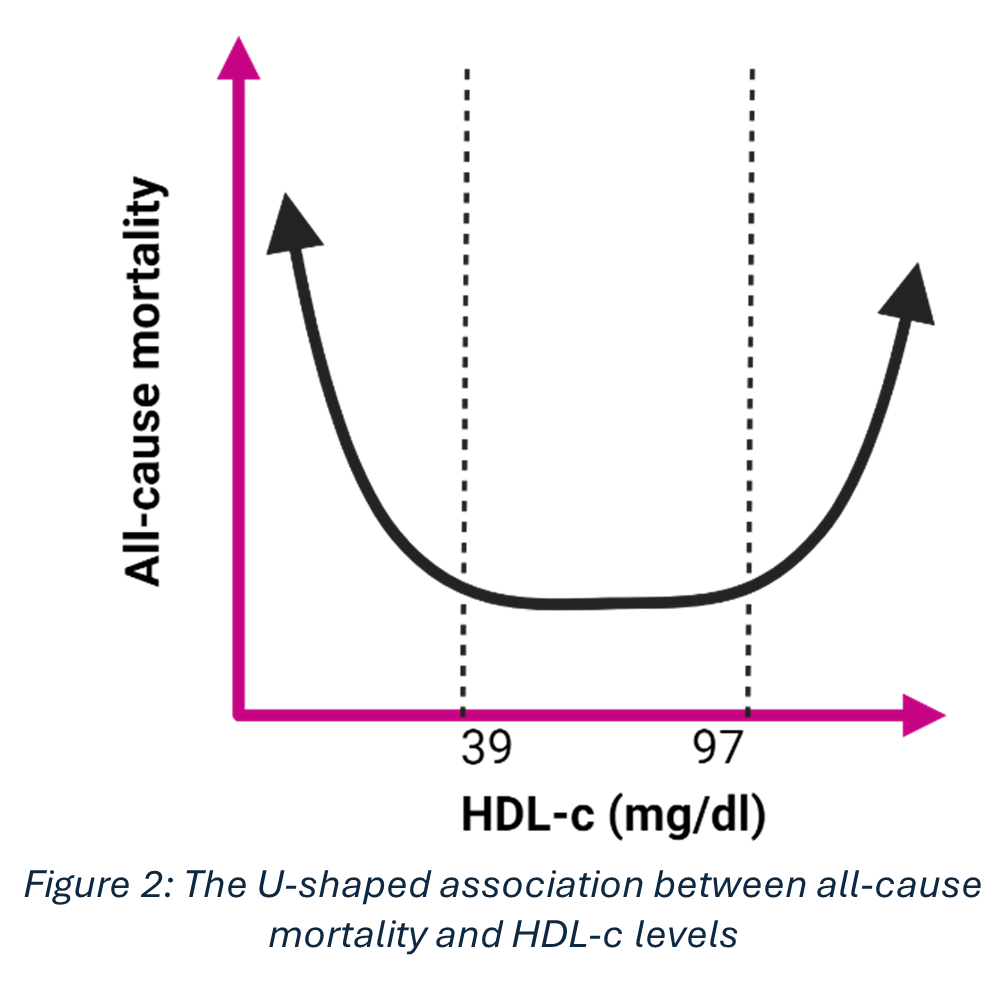
Why could HDLc become harmful in high concentrations? Well, HDL particles have other functions like anti-inflammatory properties and this may explain why the relationship is much more complex. Considering all the different molecules that make up HDL particles, we still do not fully understand what is happening to these particles when HDL-c levels are very high and It is likely that this may cause a shift in HDL composition which can lead to a change in its function and can become dysfunctional.
Further exploration into this relationship is needed to understand how HDL particles and its cholesterol cargo can impact health. In the meantime, make sure that you eat healthy to keep your good cholesterol level at the bottom of the U-shape curve!
And perhaps it is time for a shift in the way we think about HDL…
REFERENCES
- Gordon T., Castelli W.P., Hjortland M.C., Kannel W.B, Dawber T.R. (1977). High density lipoprotein as a protective factor against coronary heart disease. The Framingham Study. Am J Med, 62(5), pp. 707-14. DOI: 10.1016/0002-9343(77)90874-9.
- Madsen C.M., Varbo A., Nordestgaard B.G. (2017). Extreme high high-density lipoprotein cholesterol is paradoxically associated with high mortality in men and women: two prospective cohort studies. Eur Heart J, 38(32), pp. 2478-2486. DOI: 10.1093/eurheartj/ehx163.

 Health Science Reviews
Leave a comment