By Blake Stuart
Did you know that an insect might hold the key to countering one of our planet’s most pressing environmental issues? For many years, plastic pollution has been a huge problem, with its danger outweighed only by its convenience. Every year, millions of tons of plastic waste accumulate, wrecking ecosystems and threatening animals and humans worldwide. As a result, there ha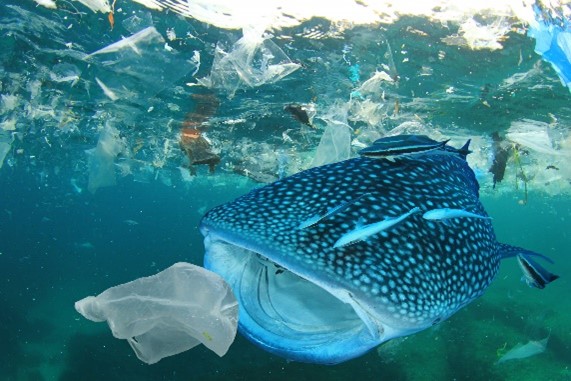 s been a huge surge in switching to more sustainable materials, and yet, despite that. the rate of plastic production is still increasing. All is not lost though, it has been discovered that the saliva of wax worms, specifically the Galleria mellonella larvae, can break down polyethylene (PE), which is one of the toughest and most commonly used plastics. Amazingly, this degradation can be seen after just a few hours at room temperature. It does need to be noted however, that despite the breakdown being visible after a few hours, the efficiency and throughput of the process is not high enough to make wax worms a useful method of recycling plastic.
In this study, researchers set out to determine what enzymes present in wax worm saliva confer this remarkable ability. Briefly, the researchers extracted the saliva from wax worm larvae and extracted all proteins. The proteins were then fractionated using size exclusion and ion exchange chromatography. The ability of the smaller fractions to degrade PE was then tested, and fractions that retained the ability were then analysed using mass spectrometry. The proteomic analysis revealed a handful of enzymes belonging to the prophenoloxidase family, two of which were shown to oxidise PE after a few hours. These PEases were then named Demetra and Ceres (the names being playfully derived from Greco-Roman deities pertaining to nature).
The discovery of these two enzymes has incredibly significant implications. Further research is required but these enzymes, or more efficient synthetic derivatives, could be synthesised and used at higher concentrations in various conditions in industrial recycling. This could lead to a more biologically friendly and even affordable method of recycling plastics. Furthermore, this knowledge about these enzymes can allow development of new plastics that are intentionally susceptible to degradation, to allow for the convenience of plastic, but without the permanent after-products.
Just imagine a future where plastic is as easily dealt with as paper. Nature has given us the tools; the rest is in our hands.
References:
Sanluis-Verdes, A., Colomer-Vidal, P., Rodriguez-Ventura, F., Bello-Villarino, M., Spinola-Amilibia, M., Ruiz-Lopez, E., Illanes-Vicioso, R., Castroviejo, P., Aiese Cigliano, R., Montoya, M., Falabella, P., Pesquera, C., Gonzalez-Legarreta, L., Arias-Palomo, E., Solà, M., Torroba, T., Arias, C. F., & Bertocchini, F. (2022). Wax worm saliva and the enzymes therein are the key to polyethylene degradation by Galleria mellonella. Nature Communications, 13(1), 5568. https://doi.org/10.1038/s41467-022-33127-w

 Health Science Reviews
Leave a comment