by Zahra Parker
Introduction
Rheumatic heart disease (RHD) is a silent killer that arises from untreated bacterial infections, and affects millions, predominantly in low and middle-income countries. It often occurs in the most vulnerable populations, where medical help might be out of reach. At its most severe, RHD leads to heart failure and may require life-saving surgery as treatment. The sad part? RHD is entirely preventable. Yet, due to the lack of definitive tests and resources in many regions, early detection remains a challenge. But here is where science steps in – This study delves deep into the proteins involved in RHD, seeking clues on understanding the disease process behind RHD, and how to detect it early.
Why This Study Matters
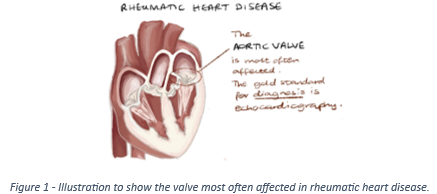
Current diagnostic tools for RHD are often out of reach for many in underserved regions, with the gold standard being diagnosis on specialized echocardiography. The need for a simple yet effective test is paramount. This study’s goal is not just to understand RHD better but to pave the way for affordable and accessible diagnostic solutions. The study seeks to uncover the unique signature of proteins that are characteristic of the disease, to develop biomarkers that can be used in early detection and diagnosis.
The Science Behind the Search
Using a state-of-the-art protein analysis technique, SWATH-MS, researchers scrutinized protein levels in 445 participants – 215 patients with severe RHD and 230 healthy individuals. They then applied machine learning to sift through the data, ultimately honing in on 56 crucial proteins. Two proteins, Adiponectin and complement component C7, stood out as key discriminators. When the protein findings were combined, the ability to identify patients with RHD based on this protein signature boasted an accuracy rate of approximately 90% using the top 6 proteins, and 95% using the top 12 proteins. The protein investigation in this study also revealed intriguing insights into the inflammation-related mechanisms that set RHD patients apart.
Key Findings
The study highlights the silent inflammation that persists in RHD patients, pointing to specific proteins that could be instrumental in gauging the disease’s severity. Not only does it help to outline a potential protein signature that can be utilized in identifying patients more at risk of severe RHD, but it also identifies opportunities for where drugs could be repurposed.
What Does This Mean for the Future?
In simple terms, this research brings hope. By shining a light on the unique protein patterns in RHD patients, we edge closer to a future where detecting and understanding the severity of RHD becomes more accessible to all, regardless of where they live or their financial status.
Reference
Salie, M.T., Yang, J., Ramírez Medina, C.R., Zühlke, L.J., Chishala, C., Ntsekhe, M., Gitura, B., Ogendo, S., Okello, E., Lwabi, P. and Musuku, J., 2022. Data-independent acquisition mass spectrometry in severe rheumatic heart disease (RHD) identifies a proteomic signature showing ongoing inflammation and effectively classifying RHD cases. Clinical proteomics, 19(1), p.7.

 Health Science Reviews
Leave a comment